Posted: Tuesday, 6 October 2026
A medium-pressure UV lamp produces ultraviolet radiation by creating an electrical discharge through mercury vapour inside a quartz tube. The discharge excites mercury atoms, which then release energy across a broad spectrum of wavelengths, including germicidal ultraviolet wavelengths used in water treatment and disinfection.
This article explains how medium-pressure UV lamps work, how UV inactivates microorganisms, why quartz is used and why lamp specification and system operating conditions matter.
From the outside, a medium-pressure UV lamp can look deceptively simple.
A quartz tube - Two ends - Electrical connections.
Switch it on and it produces an extremely intense source of ultraviolet radiation.
Inside that tube, however, a carefully controlled electrical and physical process is taking place. And once the UV leaves the lamp, another process begins as that radiation interacts with microorganisms passing through the UV treatment system.
Understanding the basics helps explain why lamp construction, electrical specification, quartz condition, water quality and UV output all matter when it comes to effective disinfection.
How does a medium-pressure UV lamp produce UV light?
A medium-pressure mercury lamp is technically a gas-discharge lamp. During operation, an electrical discharge passes through the gas and mercury vapour inside the lamp. Energy transferred to the mercury atoms results in electromagnetic radiation being emitted.
Medium-pressure mercury lamps essentially produce polychromatic output across a wide range of UV wavelengths. The US Environmental Protection Agency (EPA), for example, describes medium-pressure lamps as producing a broad spectrum of UV and visible light at multiple wavelengths, including wavelengths within the germicidal range. [1]
This is fundamentally different from conventional low-pressure mercury lamps, which produce essentially monochromatic UV output centred around approximately 254 nm. [1]
How does UV light disinfect water?
UV disinfection works by exposing microorganisms to ultraviolet radiation. UV radiation can be absorbed by biological molecules within microorganisms, including nucleic acids. This can produce photochemical damage that interferes with the microorganism's ability to replicate successfully. [2]
The World Health Organization (WHO) describes UV disinfection in terms of damage to components including nucleic acids, impairing the ability of microorganisms to replicate and it can be used against a range of microorganisms, including bacteria, viruses and protozoa. [2]. This means UV treatment does not necessarily have to physically remove microorganisms from the water. Instead, the objective is to deliver sufficient UV exposure to prevent target microorganisms from remaining infective or reproducing successfully.
Unlike chemical disinfectants, UV treatment does not itself provide a residual disinfectant in the treated water. Where residual protection is required further downstream, this needs to be considered as part of the wider treatment strategy. [3]
What actually happens to a microorganism under UV?
The interaction is taking place at a molecular level. UV radiation can cause photochemical damage to the nucleic acids of microorganisms. One important form of this damage is the creation of pyrimidine dimers between adjacent bases, which can interfere with normal replication. Research examining UV-inactivated E. coli demonstrated a strong relationship between UV dose, the formation of pyrimidine dimers in microbial DNA and the loss of the organism's ability to form colonies. [4]

But nucleic-acid damage is not necessarily the whole story.
Research into wavelength-dependent UV inactivation has shown that at shorter UV wavelengths, damage to proteins and other viral components can also contribute to the loss of infectivity. Research conducted using individual wavelengths between 210 and 290 nm, for example, found that the mechanisms involved in adenovirus inactivation varied with wavelength [5]. This wavelength dependence becomes particularly relevant when considering medium-pressure UV lamps because they produce polychromatic rather than single-wavelength UV output.
Why is a UV lamp made from quartz?
Ordinary glass isn't suitable for transmitting many of the ultraviolet wavelengths required for UV disinfection. Quartz and fused silica materials can provide the UV transmission characteristics needed and the quartz lamp envelope therefore isn't simply a container for the mercury and gases. It forms part of the optical path through which the required UV radiation leaves the lamp.
In many water treatment systems, the UV lamp is installed inside a separate quartz sleeve. The sleeve isolates the lamp and its electrical connections from the water while allowing UV radiation to pass into the treatment chamber. The sleeve itself therefore becomes an important part of UV system performance.
Why is it called a 'medium-pressure' UV lamp?
Low-pressure mercury lamps produce essentially monochromatic UV output at approximately 254 nm.
Medium-pressure lamps produce polychromatic radiation across a much broader spectrum. EPA guidance identifies medium-pressure mercury lamp output across approximately 200 to 400 nm, including the germicidal region. [1]
This broad spectral output means that microorganisms can be exposed to multiple UV wavelengths as research has demonstrated that the biological response to those wavelengths can vary between microorganisms. [5][6]
This is why it is too simplistic to say that one UV wavelength, or one lamp technology, is automatically best for every disinfection application.
Why can broad-spectrum UV matter?
Different microorganisms do not necessarily respond identically to every UV wavelength. This is particularly well documented for adenoviruses. Peer-reviewed research has demonstrated enhanced adenovirus inactivation using polychromatic medium-pressure UV compared with conventional monochromatic low-pressure UV at 253.7 nm under the conditions studied. [6]
This does not mean that medium-pressure UV is universally more effective than low-pressure UV. Rather, it demonstrates why spectral output matters.
The effectiveness of a UV system depends on the microorganism being targeted, the wavelengths delivered, the UV dose and the design and operating conditions of the reactor.
From electricity to UV disinfection
It is useful to think of a UV lamp as an energy-conversion device.
Electrical power enters the lamp > The electrical discharge excites the mercury vapour > Radiation is emitted across the lamp's characteristic spectrum.
The UV system then has to make effective use of the germicidal part of that radiation.
Not all electrical energy entering a medium-pressure lamp becomes germicidal UV. Energy is also emitted at other wavelengths and converted to heat. This is why the lamp cannot sensibly be considered in isolation. The lamp, ballast or power supply, treatment chamber, quartz sleeve, cooling arrangements, UV sensors and control system all form part of the complete UV installation.
What determines whether UV disinfection is effective?
Further research examining individual UV wavelengths found that adenovirus sensitivity varied considerably across the UV spectrum. At shorter wavelengths, reductions in infectivity indicated that damage to viral components in addition to DNA could contribute to inactivation. [5]
Simply having a UV lamp switched on does not guarantee effective treatment. The effectiveness of UV disinfection depends on the UV dose actually delivered to the microorganisms.
UV dose, or fluence, is related to UV intensity and the period of exposure. [2][7] Within a flowing water treatment system, several variables can therefore affect treatment performance, including:
- UV intensity
- Exposure time
- Water flow rate
- UV transmittance of the water
- Lamp output and ageing
- Quartz sleeve condition
- Reactor geometry and hydraulics
- Correct lamp and power supply operation
The UK Drinking Water Inspectorate identifies sufficient UV dose as essential for effective disinfection and describes dose in terms of UV intensity and the residence time of water within the reactor. [7] The EPA also identifies UV transmittance, particle content and substances capable of fouling lamp sleeves as important water-quality factors affecting UV disinfection. [1]
Why does UV transmittance matter?
Because the water itself sits between the UV source and the microorganism and some substances present in water also can absorb UV radiation.
UV transmittance, commonly abbreviated to UVT, describes how easily UV radiation passes through the water. As UVT decreases, less UV penetrates through the water for a given lamp and reactor configuration. EPA guidance identifies UVT as an important water-quality parameter affecting UV reactor performance. [1]
Turbidity and suspended material can also influence UV treatment, particularly where particles absorb UV or shield microorganisms from exposure. WHO guidance identifies turbidity or suspended matter among the factors that can affect UV disinfection efficacy. [2]
The lamp may therefore be operating correctly while changing water conditions alter the amount of useful UV reaching the target microorganisms.
Why does the quartz sleeve matter?
In UV water treatment systems, the lamp does not come into direct contact with the water. Instead, it sits inside a quartz sleeve.
That sleeve also needs to transmit the required UV radiation efficiently, and over time, deposits can accumulate on its surface. Depending on the application and water chemistry, fouling can be influenced by factors including hardness, alkalinity, iron, manganese and pH. [8]
EPA guidance specifically notes that sleeve fouling reduces the transmission of UV light from the lamp into the water and therefore affects system performance. [1][8]
Lamp sleeves can also lose UV transmittance as they age.
A perfectly functioning lamp can therefore continue producing UV while less useful radiation reaches the water. Cleaning, inspecting and, when required, replacing quartz sleeves is consequently an important part of maintaining UV system performance.
Why do UV sensors matter?
UV systems can use sensors to monitor UV intensity and provide the control system with information about operating conditions. A reduction in measured UV intensity can have several possible causes.
- The lamp may be ageing.
- The quartz sleeve may be fouled.
- The sensor window itself may be contaminated.
- Or water conditions, including UV transmittance, may have changed.
This is why diagnosing a UV system should involve looking at the complete installation rather than automatically assuming that a low UV reading means the lamp alone has failed.
UV lamps don't maintain the same output forever
Like other discharge lamps, UV lamp performance changes with operating time. UV output decreases as lamps age and that the rate can be influenced by operating hours, switching cycles and the electrical power applied to the lamp. For a disinfection system, this matters because lamp operation is ultimately about delivering sufficient germicidal UV into the water.
The relevant question is therefore not simply:
"Is the lamp still illuminated?"
It is:
"Is the UV system still delivering the required performance?"
Those are not necessarily the same thing.
The power supply matters too
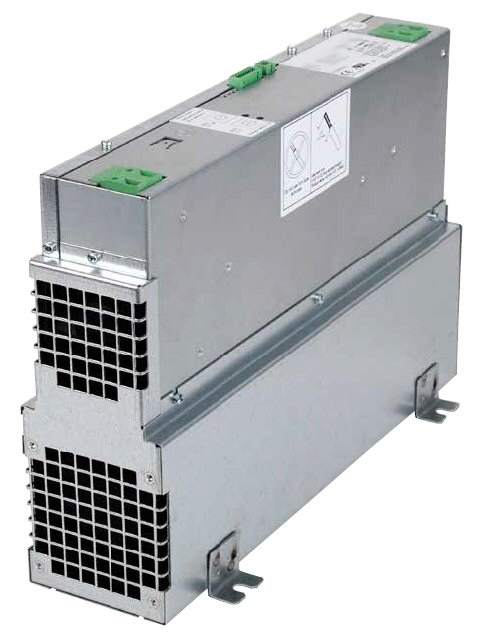
A UV lamp also needs the correct electrical operating conditions. The lamp and its ballast or electronic power supply are designed to operate together. Physical dimensions alone therefore aren't enough to determine whether a replacement UV lamp is suitable.
Arc length, electrical characteristics, lamp power, connections, quartz specification and other design parameters can all be important. A replacement lamp that physically fits into a quartz sleeve isn't necessarily the correct lamp for the UV system.
Why is the correct replacement UV lamp so important?
UV disinfection systems are engineered around particular operating parameters. Changing the lamp specification can potentially change electrical characteristics, UV output, spectral distribution and operating temperature. This is why identifying the correct replacement lamp requires more than measuring its overall length.
Alpha-Purify manufactures replacement UV lamps for a wide range of OEM and proprietary disinfection systems used around the world. Our manufacturing range includes medium-pressure UV lamps as well as supplying low-pressure and amalgam lamps, with different arc lengths, electrical specifications, end-cap arrangements and lead configurations.
Our database contains more than 20,000 lamp specifications and that breadth is necessary because UV disinfection equipment varies enormously.
Drinking water systems, wastewater treatment plants, aquaculture facilities, swimming pools, marine ballast water treatment systems and industrial water processes can all place very different demands on their UV equipment.
There is a lot happening inside that quartz tube
A medium-pressure UV lamp may look straightforward from the outside. But inside, an electrical discharge is generating a powerful, polychromatic source of UV radiation.
But producing the UV is only the beginning.
> The quartz has to transmit it
> The sleeve has to remain sufficiently clean
> The water has to allow sufficient UV to pass through it
> The reactor has to provide the required exposure
>Sensors and controls need to monitor system performance
> And the lamp and power supply have to operate correctly together.
Ultimately, the objective is to deliver the right UV radiation, at the required dose, to achieve the intended disinfection performance.
Need a replacement UV lamp?
Alpha-Purify manufactures UV lamps and supplies UV components for OEMs, distributors and end users around the world. With more than 20,000 lamp specifications in our database, covering medium-pressure, low-pressure and amalgam UV lamps, we can help identify the correct replacement lamp for your UV system.
We also supply associated UV components including quartz sleeves, O-rings, ballasts, UV sensors and control equipment.
Contact Alpha-Purify to discuss your UV lamp or system requirements.
References
[1] US Environmental Protection Agency (EPA), Ultraviolet Disinfection Guidance Manual for the Final Long Term 2 Enhanced Surface Water Treatment Rule, EPA 815-R-06-007, 2006.
[2] World Health Organization (WHO), guidance and technical literature concerning ultraviolet disinfection and drinking-water treatment.
[3] World Health Organization (WHO), Guidelines for Drinking-water Quality, 4th Edition incorporating addenda, sections concerning disinfection and ultraviolet treatment.
[4] Oguma, K., Katayama, H., Mitani, H., Morita, S., Hirata, T. & Ohgaki, S., Determination of Pyrimidine Dimers in Escherichia coli and Cryptosporidium parvum during UV Light Inactivation, Photoreactivation, and Dark Repair, Applied and Environmental Microbiology, 67(10), 4630–4637, 2001. DOI: 10.1128/AEM.67.10.4630-4637.2001.
[5] Beck, S.E., Rodriguez, R.A., Linden, K.G., Hargy, T.M., Larason, T.C. & Wright, H.B., Wavelength Dependent UV Inactivation and DNA Damage of Adenovirus 2 as Measured by Cell Culture Infectivity and Long Range Quantitative PCR, Environmental Science & Technology, 2014.
[6] Linden, K.G., Thurston, J., Schaefer, R. & Malley, J.P., Enhanced UV Inactivation of Adenoviruses under Polychromatic UV Lamps, Applied and Environmental Microbiology, 73(23), 7571–7574, 2007. DOI: 10.1128/AEM.01587-07.
[7] Drinking Water Inspectorate (UK), UV Disinfection, guidance concerning ultraviolet irradiation and drinking-water treatment.
[8] US Environmental Protection Agency (EPA), The Ultraviolet (UV) Treatment Toolkit: Technical Resource for States Using EPA's Ultraviolet Disinfection Guidance Manual to Evaluate UV Technology, EPA 815-B-21-007.